
Article: Handicrafts: A Timeless Art That Blends Creativity, Culture, and Sustainability
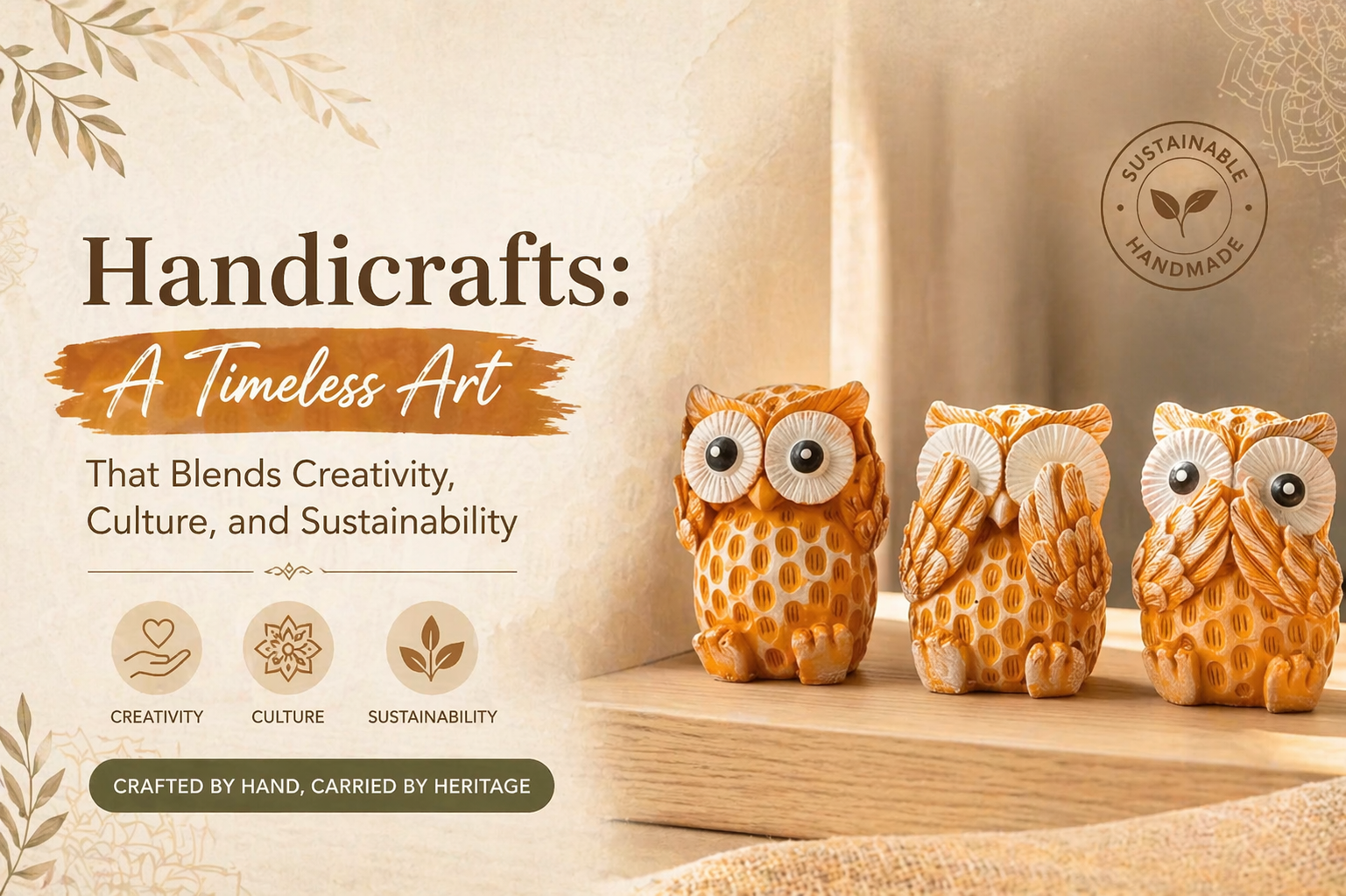
Handicrafts: A Timeless Art That Blends Creativity, Culture, and Sustainability
Handicrafts are more than just decorative items—they represent tradition, creativity, and the cultural identity of a region. In today’s fast-paced, machine-driven world, handmade products are gaining renewed importance for their uniqueness, sustainability, and artistic value.
From beautifully carved wooden items to handwoven textiles and pottery, handicrafts showcase the skills and dedication of artisans. This blog explores the significance of handicrafts, their types, benefits, and why they are becoming increasingly popular in modern times.
What Are Handicrafts?
Handicrafts are products made by hand using traditional techniques, often without the use of advanced machinery. These items are crafted using simple tools and raw materials like wood, clay, metal, fabric, and natural fibers.
Each handicraft item is unique because it carries the personal touch of the artisan. Unlike mass-produced goods, no two handmade products are exactly the same, which adds to their charm and value.
Types of Handicrafts
Handicrafts come in a wide variety, depending on the region, culture, and materials used. Some of the most popular types include:
1. Textile Handicrafts
These include handwoven fabrics, embroidery, and dyeing techniques like:
- Handloom sarees
- Block printing
- Tie-dye (Bandhani)
2. Wooden Handicrafts
Wood carving is one of the oldest forms of handicrafts. Common items include:
- Furniture
- Decorative items
- Toys and sculptures
3. Pottery and Clay Crafts
Clay is used to create:
- Pots and vases
- Terracotta items
- Decorative figurines
4. Metal Handicrafts
These are made using metals like brass, copper, and iron:
- Lamps
- Utensils
- Statues
5. Paper and Bamboo Crafts
Eco-friendly crafts made from natural materials include:
- Baskets
- Mats
- Paper décor items
Importance of Handicrafts
1. Cultural Preservation
Handicrafts play a vital role in preserving traditional art forms and cultural heritage. Each piece reflects the history and identity of a community.
2. Employment Generation
The handicraft industry provides employment to millions of artisans, especially in rural areas. It helps sustain livelihoods and promotes local economies.
3. Eco-Friendly and Sustainable
Most handicrafts are made using natural and biodegradable materials, making them environmentally friendly compared to factory-made products.
4. Promotes Creativity
Handicrafts encourage creativity and innovation. Artisans often experiment with designs, colors, and techniques to create unique products.
Benefits of Buying Handicrafts
1. Unique and Personalized Products
When you buy handmade items, you get something unique that stands out from mass-produced goods.
2. Supports Local Artisans
Purchasing handicrafts directly supports skilled artisans and helps preserve traditional skills.
3. High Quality and Durability
Handmade items are often crafted with great care and attention to detail, ensuring better quality and durability.
4. Adds Aesthetic Value
Handicrafts enhance the beauty of homes and spaces with their artistic appeal and traditional designs.
Why Handicrafts Are Trending Today
In recent years, there has been a growing demand for handmade products. Here’s why:
- Shift Towards Sustainable Living: People prefer eco-friendly and natural products.
- Appreciation for Art and Culture: Consumers value authenticity and craftsmanship.
- Rise of Online Platforms: Handicrafts are now easily accessible through e-commerce websites.
- Customization Trend: Handmade products can be personalized according to customer preferences.
Handicrafts in Interior Decoration
Handicrafts play a major role in home décor. Some popular uses include:
- Wall hangings and paintings
- Handmade lamps and lanterns
- Decorative pottery and vases
- Wooden furniture and carvings
Adding handicrafts to your home not only enhances its beauty but also gives it a warm and cultural touch.
Challenges Faced by the Handicraft Industry
Despite their importance, handicrafts face several challenges:
- Competition from Machine-Made Products
- Lack of Awareness and Marketing
- Low Wages for Artisans
- Limited Access to Global Markets
However, with increasing awareness and support, these challenges can be overcome.
How to Promote Handicrafts
To support and promote handicrafts, we can:
- Buy handmade products instead of mass-produced items
- Support local artisans and small businesses
- Share and promote handicrafts on social media
- Encourage government and private initiatives
Future of Handicrafts
The future of handicrafts looks promising as more people are becoming conscious about sustainability and cultural preservation. With the help of digital platforms, artisans can now reach global audiences and grow their businesses.
Innovation combined with tradition is the key to the growth of the handicraft industry.
Conclusion
Handicrafts are not just products—they are stories of tradition, skill, and creativity. They connect us to our roots while promoting sustainable living and supporting artisans.
In a world dominated by machines, choosing handicrafts is a step towards preserving culture, encouraging creativity, and making environmentally responsible choices.
So next time you shop, consider buying handmade—you’re not just purchasing a product, you’re supporting an artist and keeping a tradition alive.


Leave a comment
This site is protected by hCaptcha and the hCaptcha Privacy Policy and Terms of Service apply.